
Signage Workshops fills Gaps in Knowledge and Skills
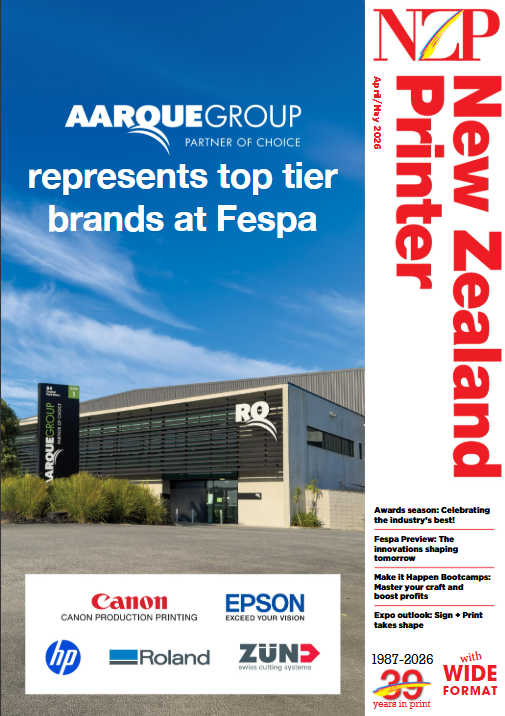
Signage Workshops fills Gaps in Knowledge and Skills Previous Post Signage Workshops fills Gaps in Knowledge and Skills May 20, 2026 The article highlights how Make It Happen Sign Academy, led by fourth‑generation signwriter Michelle Henry, is filling critical skills gaps across the sign and print industry through practical, hands‑on training. It explains that many people enter the signage sector from design, print, or admin backgrounds without formal training in sign‑specific production, materials, or installation. Michelle’s workshops that were delivered in partnership with PrintNZ – give participants the foundational knowledge they’ve been missing, helping them understand how signage is designed, built, and installed in the real world. Click here to read the full article. Previous Post
Is Crazing driving you Crazy? (see what I did there 😉)
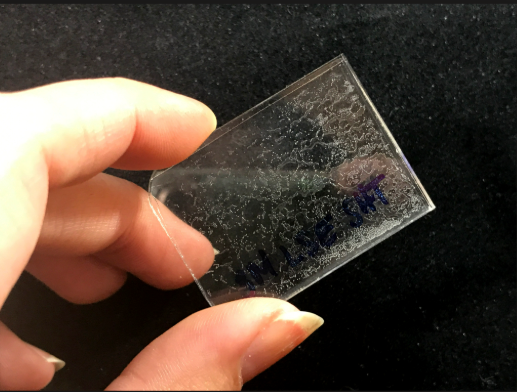
Is Crazing driving you Crazy? (see what I did there 😉) Previous Post Is Crazing driving you Crazy? (see what I did there 😉) May 4, 2026 I’m not sure if crazing is a British term… or if it’s just something my family made up at some point. Either way, it’s a topic that comes up in almost every Bootcamp -usually because delegates have seen it many times but never knew what it was called… or why it happens. So let’s clear it up. Crazing = micro‑cracks in the surface of acrylic caused by stress, chemicals, or heat. They don’t always break the material, but they do weaken it and make it look cloudy, cracked, or frosted. If you’ve ever made a beautiful acrylic plaque, placed it on the dispatch table for QC, and had it bounced because it’s suddenly covered in tiny cracks… Or worse – installed it, only for the client to call the next day saying it’s “cracked”… That’s crazing. And once it starts, you can’t fix it. It weakens the panel, makes illumination patchy, looks unsightly, and leads to premature failure. Why crazing happens (the real causes inside sign shops) 1. Solvent / Alcohol exposure Acrylic hates solvents, alcohols and harsh cleaners and extruded acrylic is especially vulnerable. Even a quick wipe with a rag that has alcohol on it can cause crazing if the sheet is under stress or has micro‑scratches. Cast acrylic is more stable BUT if the edges have been laser‑cut or flame‑polished those edges will crack instantly when exposed to solvents. 2. Stress from fabrication ▪️ Over‑tightened fixings ▪️ Poorly designed folds ▪️ Too much heat during bending Cast acrylic reduces the risk, but technique still matters. 3. UV + age Older acrylic (especially extruded) becomes brittle and far more prone to crazing. 4. Wrong adhesive Using the wrong glue, or too much solvent cement, can attack the surface and trigger crazing. So how do we prevent crazing (the part your team really needs) ▪️ Use cast acrylic for anything fabricated or lasered ▪️ Advise clients to clean signs with mild soapy water, not chemicals ▪️ Don’t overtighten fixings ▪️ Use adhesives designed specifically for acrylic ▪️ Let laser‑cut parts “rest” before assembly ▪️ Avoid exposing stressed acrylic to solvents We touch on these fundamentals in The First Drill and Signage Bootcamp, because crazing is one of those issues that quietly costs sign shops time, money, and reputation. If crazing (or any other fabrication mystery) is driving your team crazy, reach out. We can map out practical, confidence‑building training that helps your staff understand why things go wrong and not just how to fix them after the fact. Drop me an email – michelle@makeih.com Previous Post
The Sticky Stuff!
The Sticky Stuff! </h2 > Previous Post The Sticky Stuff! April 20, 2026 Let’s talk about the sticky stuff – adhesives. If there’s one topic that consistently causes headaches in sign and print, it’s adhesives. And I’ve yet to meet a company who won’t admit they’ve had at least one sign fall off a wall thanks to tape. And if they’re being really honest… they’ll also admit the tape wasn’t the problem. Because most failures come down to surface prep, substrate, weight, environment, and adhesive choice – not the tape itself. We’re a visual industry, so we naturally reach for the thinnest, cleanest-looking option. Usually a pressure-sensitive adhesive (PSA) – the kind we can apply to the back of acrylic and laser cut. And that’s fine… when the conditions are right. Where PSA works well • Stroke widths that aren’t too thin (laser cutting can dry out the adhesive) • Lightweight letters • Smooth, high–surface-energy substrates like plastics, glass, metals, and epoxy paints In those situations, PSA performs exactly as intended. Where PSA fails • Internal walls • Textured or uneven surfaces • Low–surface-energy paints • Heavier letters • Recently painted walls This is where adhesive choice becomes a science and where many teams underestimate what’s actually required. A quick breakdown of adhesive strength. These numbers tell the story: • PSA tapes: 1–10 PSA • Foam tapes: 200–500 PSA • Acrylic adhesives: 2,000–4,000 PSA When you compare them side by side, it becomes obvious why thin PSA struggles on anything other than a perfect surface. Surface prep: the step most people skip If you want a bond to hold, prep is non-negotiable: • Clean both the sign and the surface with a 50:50 mix of water and isopropyl alcohol • Let it dry completely • Apply the tape only once the surface is ready. Skipping this step is one of the most common reasons signs fail – especially on internal walls. Use a J roller – it makes a huge difference. Once the sign is fixed to the wall, adhesive specialists recommend using a J roller to apply firm, even pressure. Why? Because pressure helps the adhesive: • Settle into the tiny, invisible gaps on the surface • Increase the effective surface area • Create a stronger, more reliable bond It’s a simple step that dramatically improves performance. Painted walls: timing matters If you’re applying to a freshly painted wall, you need to wait at least 7 days before installing signage. Here’s why: Fresh paint continues to off gas as it cures. If you apply tape too soon, the adhesive bonds to the paint, not the wall. When the paint releases, the sign releases with it. Which leads to the next point… If a sign falls off, here’s how to diagnose the failure. If the sign is on the floor with paint stuck to the back: → The surface failed. The tape did its job – the paint didn’t. If the tape is still on the wall and the sign is on the floor: → Either the prep to the signboard failed or the tape failed. And in most cases, it’s the prep. If the sign + tape are on the floor together: → Again, prep to the wall failed or the tape – but almost always prep. Surface energy, contamination, moisture, dust, and paint curing are the usual culprits. How to store tapes properly. Adhesives are sensitive to environment. To keep them performing at their best: • Store tapes in a cool, dry place • Keep them sealed to prevent dust contamination • Avoid direct sunlight and heat sources • Use older stock first (adhesives age) • Keep rolls upright, not crushed under weight Good storage = consistent performance. And finally… bond strength takes time A tape bond doesn’t reach full strength immediately. It takes around 72 hours to reach maximum performance. So if you’re installing something heavy, textured, or high-value and relying on bond strength alone… you’re gambling. Why this matters This is the kind of detail that separates a smooth install from a callback, a happy client from a frustrated one, and a profitable job from a margin-eater. It’s also exactly the kind of thing we discuss in workshops – because even experienced teams often haven’t been taught the why behind adhesive choice. If you’re seeing failures, or you’re unsure which adhesive is right for which substrate, I’m always happy to talk through it. What’s the stickiest situation you’ve run into lately? Previous Post
Behind the Flames
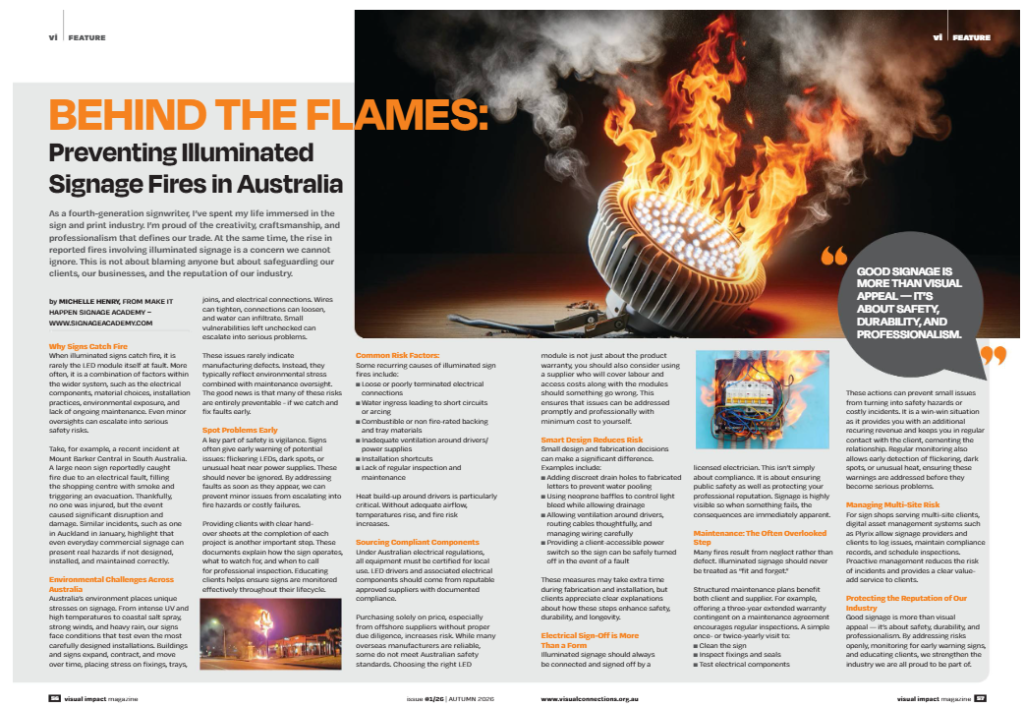
Behind the Flames Previous Post Behind the Flames April 7, 2026 Illuminated signs don’t fail without warning. Learn the real causes of signage fires and how better design, compliance and maintenance can prevent them. Illuminated signage fires are becoming more visible across the industry, but the LED modules themselves are rarely the culprit. In my latest article for Visual Impact Magazine, I break down why these incidents happen, the unique environmental pressures we face in ANZ and the practical steps sign and print businesses can take to reduce risk. From loose electrical connections and water ingress to heat build‑up around drivers and non‑compliant components, most failures stem from system‑level issues rather than product defects. The good news is that the majority of these risks are preventable with better specification, smarter fabrication decisions, and structured maintenance.I also explore why Australia’s coastal exposure and UV intensity make design and installation decisions even more critical and how routine inspections, compliant components, and proper electrical sign‑off protect both clients and the reputation of our industry. This is not about blame. It’s about professionalism, safety, and strengthening the trade we’re all proud to be part of.Read the full article here: VI MAG AUTUMN 2026 Previous Post
Is the First Drill the right bootcamp for me?
Is the First Drill the right bootcamp for me? Previous Post Is the First Drill the right bootcamp for me? January 16, 2026 This educational workshop is designed for anyone new to the sign and print trade. Consider a scenario where you’ve just hired the near-perfect sales representative. They are great with people, understand business development and fit in well with the rest of the team, but they know nothing about signage. They call decals “stickers” and illuminated signs “light up” signs. Fear not… The First Drill has you covered. This one-day intensive sign training course will give them the sign and print essentials needed to hit the ground running and start bringing in the sales. Perhaps you’ve taken on a new designer. They have strong design experience and a great eye for detail but beyond aesthetics, they know little about signs or what things need to be taken in to account when designing them. Will the stroke width be sufficient to illuminate that fabricated letter? Will that sign be legible when viewed from that distance? This sign and print educational bootcamp covers all of that. Or maybe you’ve hired an apprentice and want to make sure that they get the best possible start in this trade. No matter the role of your new staff, we take them by the hand an introduce them to the world of signs, showing them just how cool signs are and how lucky they are to be entering this industry. We train all those new to the sign industry the purpose of signs and print, teach them the core function and impact that signage has in business. We help educate all trainees on the many materials available and give them the knowledge to select the right one for the job at hand, with confidence. We discuss sign products, installation methods, design considerations, resource consent and share top tips for getting it right every time. This interactive and educational workshop has been designed specifically as an introduction to the sign industry and will help bring delegates up to speed quickly. Previous Post
From blank walls to better business – Discover the Power of Colour

From blank walls to better business – Discover the Power of Colour Previous Post From blank walls to better business – Discover the Power of Colour December 23, 2025 Signage is more than just putting a logo or company values onto walls. We can utilise them to produce wall murals and wallpapers to shape how people feel, focus, and perform. Research shows that plain white offices can increase boredom, mistakes, and disengagement, while the right use of colour and imagery improves productivity, mood, and concentration. Click here to read this article to see how you can use this knowledge to become the consultant and save your clients money whilst increasing your profits. Previous Post
The First Ever “First Drill” Bootcamp Kicks Off at PrintNZ
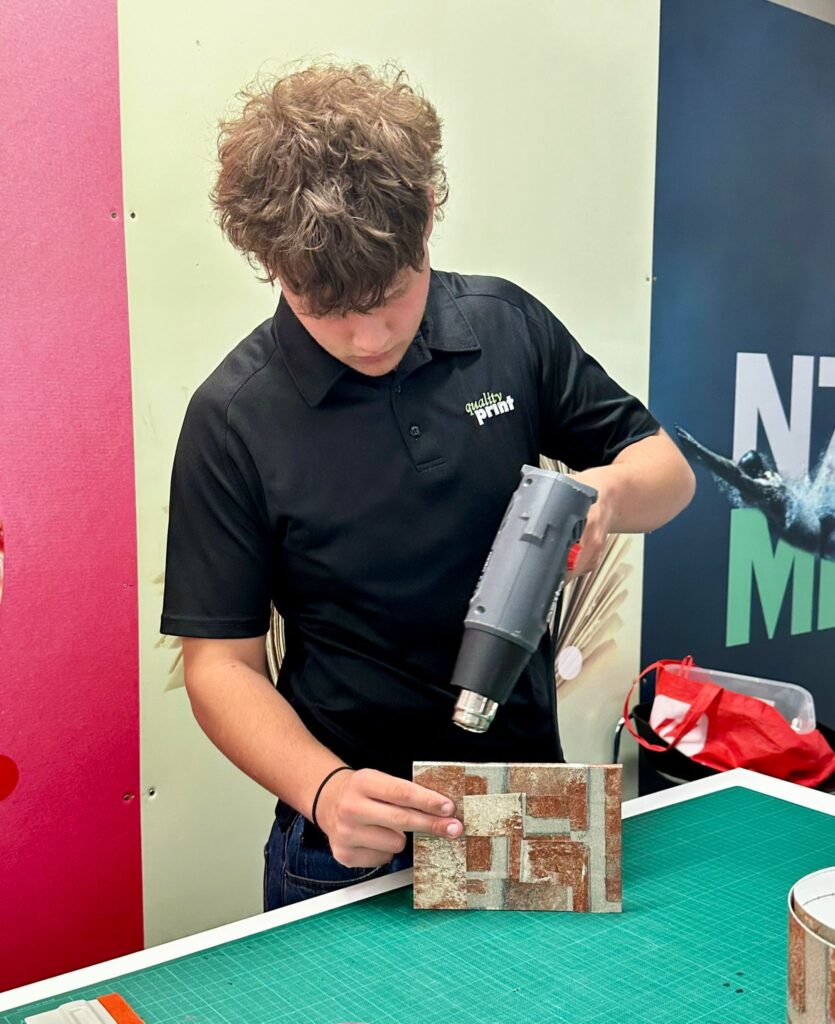
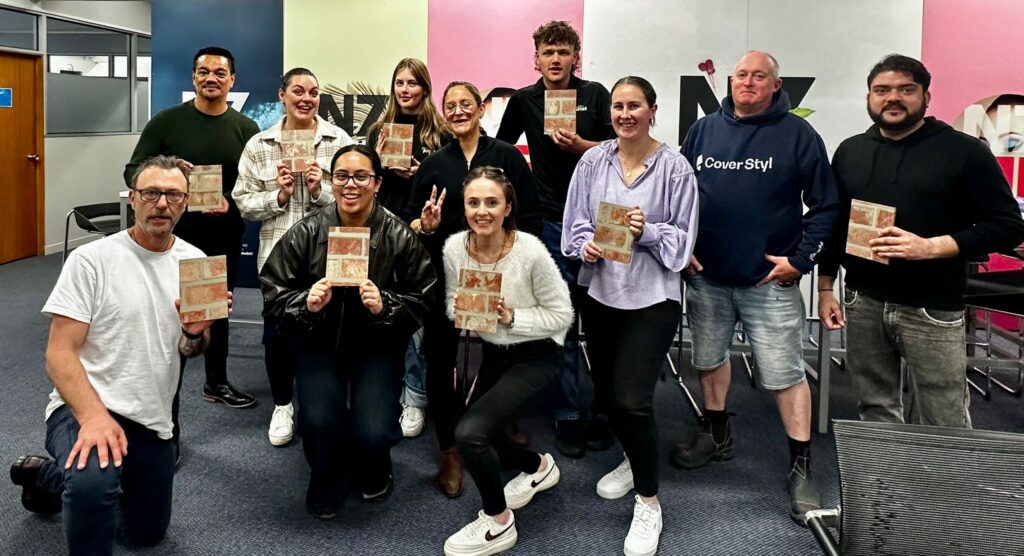
The First Ever “First Drill” Bootcamp Kicks Off at PrintNZ </h2 > Previous Post The First Ever “First Drill” Bootcamp Kicks Off at PrintNZ December 18, 2025 The very first First Drill bootcamp has officially wrapped up… and what a day it was. Hosted at PrintNZ, the inaugural First Drill brought together nine delegates from across the print trade for a full-day introduction to the world of signage. Designed specifically for those new to signage, the bootcamp focused on building understanding, confidence, and practical knowledge that attendees could take straight back to their businesses. An Introduction to All Things Signage First Drill was created to demystify signage, from terminology and materials to processes and practical decision-making. Throughout the day, delegates were guided through how signage actually works in the real world, helping to bridge the gap between print and sign production. What made the day particularly valuable was the ability to apply learning to real-life scenarios. Delegates brought genuine challenges from their own businesses to the table, and together we worked through solutions. In several cases, those conversations alone helped companies avoid costly mistakes – saving thousands of dollars by doing things right the first time. Learning from Industry Experts A key part of the day was hearing directly from industry specialists. An expert from Total Supply took delegates through the wide range of self-adhesive vinyls, explaining where each product performs best and answering some of the tougher, often-asked questions around selection, application, and durability. For many in the room, it was the first time these products had been clearly broken down in a way that made sense. The hands-on component of the bootcamp was delivered by PSP, who introduced delegates to architectural films. Attendees had the opportunity to get practical, wrapping foam PVC panels with film, gaining firsthand experience and a better appreciation of the skill, technique, and potential of these materials. A Day of Learning, Lingo and Laughter First Drill isn’t about theory alone. It’s about understanding the language of signage, knowing what questions to ask, and feeling confident when signage conversations come up – whether that’s in sales, design, project management, or production. The day was filled with plenty of laughs, open discussion, and shared learning, creating an environment where no question was too basic and every conversation added value. A Strong Start for First Drill The success of this first First Drill bootcamp at PrintNZ has set a strong foundation for what’s to come. It highlighted just how much value there is in giving people the tools, language, and understanding they need to engage with signage properly and early feedback from attendees has been overwhelmingly positive. With more Bootcamps at PrintNZ planned, this first session has proven that there’s a real appetite for practical, accessible signage education within the print industry. Previous Post Workshop Benefits
2026 March 11th – On The Frontline (Christchurch, NZ)

2026 March 11th – On The Frontline (Christchurch, NZ) VENUE Air Force Museum of New Zealand25 Harvard AvenueChristchurchNew Zealand8042 PRICING A$ 900, one person, one workshop A$ 1400, one person, two workshops BOOK NOW Book Now
2026 March 10th – Signage Bootcamp (Christchurch, NZ)

2026 March 10th – Signage Bootcamp (Christchurch, NZ) VENUE Air Force Museum of New Zealand25 Harvard AvenueChristchurch New Zealand8042 PRICING A$ 900, one person, one workshop A$ 1400, one person, two workshops BOOK NOW Book Now